
Release Neck Tension to Relieve Jaw Pain
Neck tension and jaw pain often go hand in hand. Headaches can also be part of the same picture.
When the neck is guarded and restricted, the jaw often stays tight in response. If a headache is also present, the pattern can often point to specific neck muscles which are in tension.
If we can release the neck, the jaw frequently softens on its own.
This is a technique I use regularly in clinic — and one that many of my clients find produces an immediate and noticeable change.
What Connects Neck Tension and Jaw Pain?
The jaw, neck, and head share muscles, connective tissue, and workload. When one area becomes strained, the others tend to adjust.
That adjustment is not a malfunction. It is protection.
When the body senses strain — from stress, posture, clenching, poor sleep, or even a minor injury — it stabilises the area by increasing muscle tone and reducing movement. This protective response makes sense in the short term. But when it persists, tension spreads. The neck stiffens, the jaw braces, and headaches often follow.
Trying to force that tension out rarely works. When a guarded area is pushed or stretched aggressively, the nervous system often responds by tightening further — not releasing. This is why so many people find that stretching brings brief relief, only for the tightness to return quickly, or feel worse the next day.
What tends to work better is an approach that reassures the body rather than challenges it.
What Is Positional Release?
Positional release is a technique that works with the body’s own logic rather than against it.
Instead of pushing into tension, you find the position where the tissue feels most at ease — and hold it there. Within 20 to 60 seconds, the nervous system registers that the area is safe, and the tissue begins to soften on its own.
As Leon Chaitow, one of the pioneers of this approach, described it: the aim is inviting change rather than demanding it.
The compression element — which you will use in this technique — adds a gentle facilitating force that can speed up the release without threatening the system.
This is not a stretch. It is not an exercise. It is a way of giving the body a moment of ease, and allowing it to respond.
How to Do It
The Technique
First let’s assess:
- Sit comfortably in an upright, relaxed position.
- Rotate your head to look as far as is comfortable over one shoulder.
- Then rotate in the other direction.
- Notice which side feels stiffer or more painful.
- Return to neutral.
Now the Positional Release
To create a release — we are going to rotate the way that was less tense, less painful
- So rotate your head back toward the side that felt less stiff — your easier side.
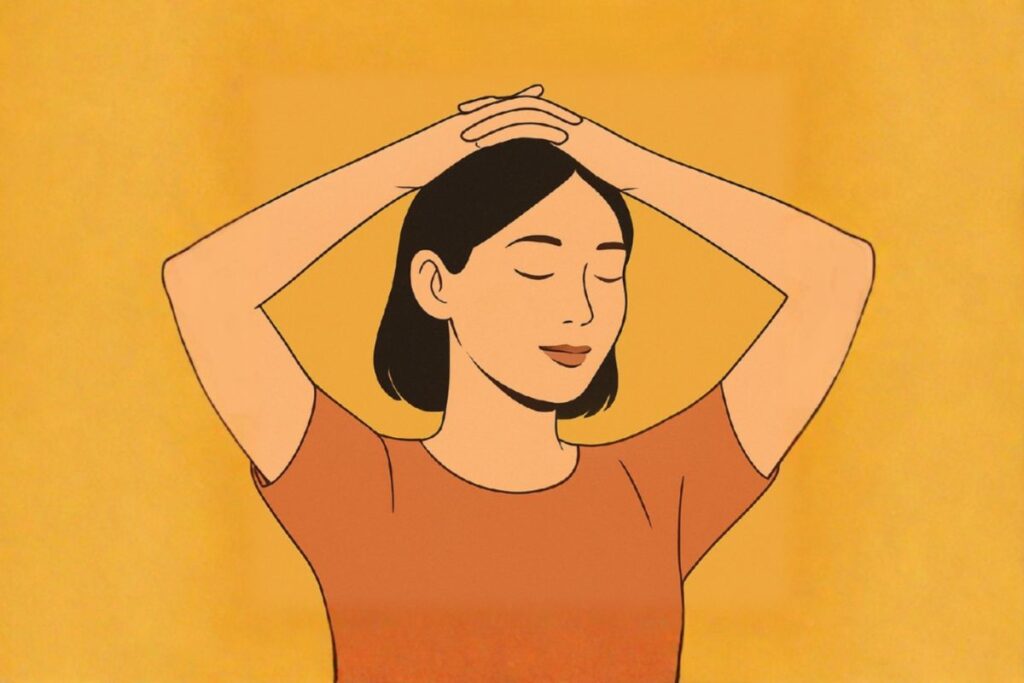
- Interlock your fingers and rest them on top of your head.
- Take a breath in, and as you breathe out, apply light downward pressure from your hands — directly down through the spine.
- Keep your head, neck and torso aligned.
- Do not apply excessive pressure. If there is any pain, stop.
- Hold for 20 to 40 seconds. It should feel relaxed and releasing — not forced.
- Return to a neutral position
Now let’s reassess
- Test the stiffer side again. Is it more free? Less painful?
- If still a bit tense, repeat up to three times to achieve maximum release.
What You Might Notice
Some people feel an immediate increase in range of movement. Others notice the jaw softening, a headache easing, or a sense of release through the neck and shoulders.
If the change feels subtle at first, that is normal. The nervous system can take a moment to register that it is safe to let go. Repeating the technique two or three times in the same session often produces a noticeably greater release than the first attempt.

Written by
Steven Murdoch
TMJ specialist and musculoskeletal pain-care therapist based in London. CNHC registered · Trained at Jing (BTEC Level 6) and with Helen Baker at TMJ Massage Therapies.
About Steven →You may find these guides helpful

A Reassuring Note
A stiff neck and tight jaw can feel stubborn — but in most cases this is protection, not damage.
When you stop trying to force that protection away and instead work with it, the body often responds quickly. This technique is a good example of that in practice.
Looking for something else?
When to Seek Medical Advice
Most jaw tension and TMD symptoms are related to muscle guarding, stress, or nervous-system patterns, and they often improve well with gentle self-care.
It’s a good idea to seek medical advice if you experience:
sudden, severe, or unexplained facial or jaw pain
injury, swelling, or suspected dislocation
numbness, weakness, or changes in vision or speech
a fever, illness, or signs of infection
new pain accompanied by weight loss or general unwellness
persistent symptoms that worry you or don’t improve over time
These situations aren’t common, but it’s always appropriate to check in with a qualified medical professional if something feels unusual or concerning for you.