Jaw Knowledge

Woman touching her jaw, representing understanding TMJ and jaw pain
Understanding what is happening in your jaw is often the first and most important step toward recovery.

Understanding TMJ and what causes jaw tension can genuinely help improve recovery.

When you know what is going on it helps reduce anxiety – that in itself can tone down jaw tension. 

If you are considering a medical route, knowledge helps you ask informed questions of clinicians. You can compare their clinical reasoning for the treatment with your own understanding and this can help you decide if it is right for you.

Alternatively, if you are exploring a non-medical route — whether that’s a complementary therapy like TMJ massage, or self-care at home — the same applies. Understanding what is driving your jaw tension helps you understand the theory of the approach and how to apply it for best effect.

The four articles below cover the big picture. Start with whichever feels most relevant to you.

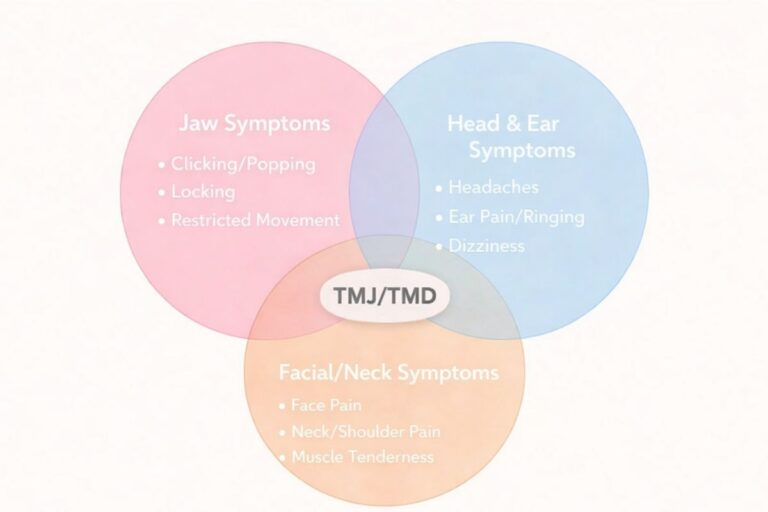
What TMJ / TMD Really Is

TMJ and TMD can sound serious, but is it really? Find out what it means and how it differs from one person to another.

Read: What TMJ / TMD Really Is

Causes of Jaw Tension

What causes TMD? Why do jaw issues begin? As a TMJ therapist, here are the 3 clear categories I see in my clinic.

Read: Causes of Jaw Tension

The Mind & The Jaw

Why does jaw tension persist? Understanding the role of the nervous system can be the start to resolving the issue.

Read: The Mind & The Jaw

The Body & The Jaw

Jaw tension is rarely just a jaw issue. Here we look at what connects the jaw to tension in the body, including the hips and even the feet.

Read: The Body & The Jaw

What Next?

You may also want to explore the Jaw Care articles. These practical guides cover self-care — exercises, daily habits, and simple techniques to try at home.

Prefer personalised support?

If you’d like one-to-one help with jaw pain or TMD, you can book a session with me directly.