
TMJ Self Massage: What the Guides Don’t Tell You
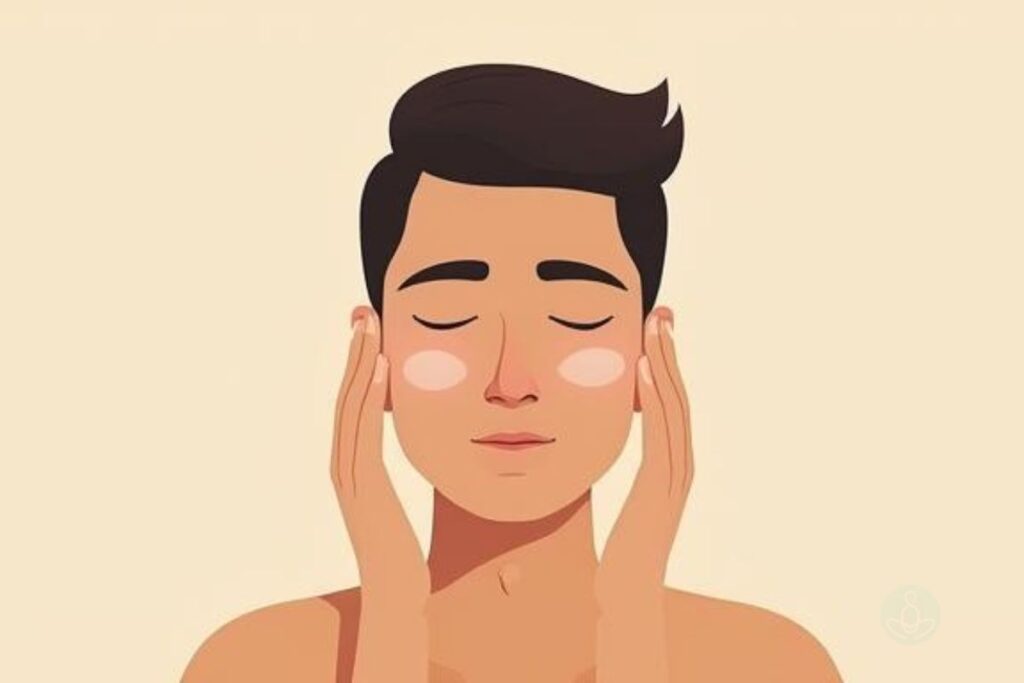
If you live with jaw pain or TMJ symptoms, you’ve probably tried a lot already. You may have followed guides that tell you which muscle to press, how hard, and for how long. Press here for 30 seconds. Circular motions on the masseter. Repeat three times a day.
But what if you’ve tried those routines and your jaw is still in tension? Well, it may be worth asking why, rather than just where.
What the guides don’t tell you is that jaw tension is rarely just a jaw problem. It’s a whole-body pattern — driven by the nervous system, held in the fascia, and often maintained by tension in places you wouldn’t expect. When we understand that, our intent shifts, our area of focus widens, and the jaw often naturally lets go as a result.
What are you trying to do?
The word massage suggests doing something to the tissue — pressing, working, releasing, fixing. For jaw pain, that idea can be unhelpful.
Most jaw pain isn’t caused by a single tight muscle waiting to be released. More often, the jaw is already guarded. It’s holding on because it doesn’t yet feel safe enough to let go.
If your approach feels mechanical, forceful or corrective, the nervous system may interpret that as another reason to brace — and the jaw tenses more in response.
My recommendation is to pause and ask yourself: what are you actually trying to do? Are you trying to correct something, or are you trying to reassure the body and calm the tension?
My suggestion is to approach as you would an injured animal. If something approaches an already sensitive system quickly or forcefully, the question being asked at a nervous system level is: Is this a threat? If the answer is yes, the response is more tension, more guarding, more sensitivity.
This is why “working into it” or pushing through discomfort so often leads to flare-ups. The jaw isn’t stubborn — it’s protective. Research on massage and TMJ pain consistently supports this — gentler approaches produce better outcomes.
So rather than thinking of self massage as something you do to the jaw, think of it as creating conditions where the jaw may begin to soften on its own. Curiosity works. Force doesn’t.
Don't just massage the jaw
You no doubt already know — jaw tension rarely exists in isolation.
When the nervous system is under strain — be it stress, pain, poor sleep, or simply feeling overloaded — the body often responds by holding and bracing. The jaw is frequently part of that pattern, but it’s rarely the whole story.
This is one reason why massaging the jaw directly doesn’t always help. If the wider system is still on high alert, the jaw has no reason to let go — even if the muscles themselves have been worked on.
So you’ll see here that I am going to recommend exploring other parts of the body. Heads up — once you start looking, you will find tension in surprising places. What’s more, when tension eases in other parts of the body, the jaw often lets go.
Think fascia — not just the muscles
Fascia is the connective tissue that supports and links every muscle, nerve, and joint in the body. This continuous network can be traced from the jaw, through the neck and trunk, down into the pelvis and hips, and as far as the soles of the feet.
From this perspective, tension doesn’t stay neatly contained in one area. When the body is under long-term strain, load can be distributed across these connected regions. This may explain why someone might experience both jaw pain and hip tension — not because one is causing the other, but because the body is organising strain through shared tissue pathways.
In practice, this means that working with areas like the glutes, piriformis, or even the feet can sometimes allow the jaw to soften — without touching it directly at all.
The nervous system and the vagus nerve
The fascia has more nerve endings than any other tissue. It is a sensory organ. When the nervous system feels threatened, the fascia hardens. When the nervous system feels safe, it softens. So if you are working with the fascia, you are working with the nervous system.
And the vagus nerve is central to that relationship. The vagus nerve — the longest nerve in the body — runs from the brain to the gut, connecting the heart, lungs, and digestive system along the way. It also directly supplies the muscles of the jaw.
When the vagus nerve is stimulated gently, it can shift the nervous system from a state of protection towards rest. For many people with persistent jaw tension, this is the missing piece — the muscles aren’t simply tight, the system is still on guard.
Vagus nerve massage is one of the simplest ways to support this shift, and it can be especially helpful during flare-ups when the jaw itself feels too sensitive to touch.
How this affects your self-massage approach
So with that said, rather than thinking of TMJ self massage as a jaw-only activity, it is probably more helpful to think of it as whole-body care — yes, we may massage the jaw if it’s not too sensitive, but we are definitely exploring other areas too.
The areas connected to jaw tension close to home include the masseter, pterygoids and temporalis muscles. These are the muscles of mastication — the chewing muscles.
Not too far away are the occiput (back of the head) and the neck and shoulder muscles — the scalenes, sternocleidomastoid, upper trapezius, and the small muscles of the upper neck.
Further afield are the hips and gluteal area, and the feet.
Each of these can be explored with the same listening, curious approach described in this guide.
How to do TMJ self massage well
It’s not about pressure — it’s about intent.
The most important part of self-massage isn’t where you place your fingers. It’s how you approach the contact. A helpful mindset is to ask rather than tell — approach slowly, and wait to see how the jaw responds.
How much pressure is okay? Use a simple 0–10 scale, where 0 is no sensation and 10 is unbearable pain. Aim for no more than 4/10. Once you’ve found a gentle pressure, pause and notice:
- Does the sensation stay the same?
- Does it soften from a 4 to a 3 or 2?
- Or does it increase?
If it gradually eases, the tissue and the nervous system are settling. If it increases, reduce pressure or stop. More pressure is not more effective. Go light — then ask yourself: can I go lighter still?
Rather than massage — explore. Think in terms of three simple approaches:
- Hold — light, still contact can be surprisingly effective. Sometimes doing less allows more change.
- Slow movement — small, unhurried movements invite curiosity rather than correction.
- Pin and move — holding a point lightly while slowly opening or closing the jaw can feel helpful, as long as it stays easy and unforced. Let the tongue rest gently on the roof of the mouth just behind the front teeth — this naturally limits how wide the jaw opens and adds a sense of stability.
Throughout — notice your breath. Is it flowing easily? Has it become short or held? Your breath often tells you more about how your system is responding than the jaw itself. A steady breath means the system feels safe. A held or tightened breath is a signal to ease off.
When the jaw feels too sensitive to touch, don’t force it. Sometimes, in a flare-up, the jaw is the last place to start. Think of it as a signal to explore elsewhere in the body. We’ll explore where shortly.
Where to self-massage — the jaw and beyond
You don’t need to work on every area. Some days, the jaw is the right place to start. Other days, it isn’t. The best place to begin may be where the body feels most receptive — not where symptoms shout the loudest.
The masseter and other jaw muscles
The masseter connects the jaw bone (mandible) to the skull. Find it by feeling for the cheek bone in front of the ear. Work your way down the muscle until you get to the jaw bone. It’s one of the strongest muscles in the body relative to its size, and it’s often the first place people think to massage. When you explore here, you’ll also be reaching the lateral pterygoids and where the temporalis attaches to the jaw bone.
This is the area most likely to feel guarded. If it does, that’s not a reason to press harder. Instead, go light, then think “can I go lighter still?” Alternatively, you might find that working on the neck or hips first allows the masseter to be more receptive when you return to it.
The temporalis (temples)
The temporalis is a broad, fan-shaped muscle at the side of the head, above and slightly in front of the ear. It helps close the jaw and is often involved in headaches associated with TMJ tension.
The temples can be a useful place to explore light touch, particularly if the jaw itself feels guarded. Let the contact be light and unhurried. You may notice small shifts in pressure, changes in your breath, or a sense of settling elsewhere in the body. There is nothing you need to make happen here.
The temporal area is also one of the most accessible points for vagus nerve stimulation — light, slow contact here can have a calming effect on the jaw muscles and the nervous system more broadly.
The occiput, suboccipitals and posterior neck
Now we are moving away from the jaw and this is where things start to get interesting. For many people, this is when the jaw softens and lets go of tension.
We are interested in three closely connected areas: the occiput (back of the skull), the suboccipital muscles just below the base of the skull where the head meets the back of the neck, and the posterior neck muscles at the back of the neck. All are closely connected to the jaw through fascia and nerve pathways.
This area responds well to resting into pressure rather than applying it — letting the weight of your head lightly rest against two small massage balls in a pouch or your fingertips. You might remain still, make small nodding or turning movements. Be sure to cover all three areas. Each will have a different sensation. Notice how your breath, neck, and jaw respond.
If this area feels relevant, my Release Neck Tension to Relieve Jaw Pain shows how to take a “stuck drawer” approach to letting go of neck tension.
The hips (glutes and piriformis)
This one surprises people — but the hips play a powerful role in overall holding and bracing, and the jaw frequently responds when tension eases here.
The jaw and the pelvis are both common places where the body holds protective tension. They are connected through fascial networks that run the full length of the trunk, and both are influenced by the same nervous system responses. In clinical practice, it is common to see jaw tension soften during work on the glutes — and vice versa.
To explore, lie on your back with knees bent or on your side. Place a massage ball under the soft tissue of the hip or buttock and allow your body weight to rest into it. Move slowly, or remain still. You’re looking for a “that feels good” quality of pressure. Notice whether anything changes elsewhere — including in the jaw. For more detail, read Jaw Pain and Hip Tension: Understanding the Link.
The feet (plantar fascia)
The feet can be a surprisingly helpful entry point, especially if the jaw feels too sensitive to approach directly. The plantar fascia on the sole of the foot is part of a deeper fascial network that runs all the way up through the body to the tongue and jaw.
Place a massage ball on the floor and rest the sole of your foot on it with partial, supported weight. Roll slowly, pause on areas of interest, or simply stand and notice. Some people feel the effects travel upward through the body. Others simply find it calming — which in itself helps the jaw.
Optional self-care tools

If you’d like to take this approach further, the Jaw & Body Care Set comes with a detailed self-massage guide covering each of the areas described above — with photos and guidance you can return to in your own time.
The set is designed to complement the ideas in this guide — not to replace hands-on self-massage or create another routine to follow.
Do you need massage balls?
No — you don’t need massage balls to care for your jaw.
Hands-only self-massage is completely valid and often enough.
Massage balls can be useful because they:
- create a different quality of contact
- allow you to rest into pressure rather than apply it
- help some people sense areas more clearly
For others, hands feel safer and more intuitive.
Neither is better. Try both if you like, and notice how your jaw — and your breath — respond.
Signs the contact is supportive:
- a sense of ease or settling
- your breath becoming slower or less held
- the tissue feeling less guarded or dense
- the jaw feeling more spacious or less clenched
Signs to ease off or stop:
- your breath becoming held or shallow
- increased jaw clenching or guarding
- a sense of effort, urgency, or frustration
- pain, sharpness, or a strong urge to push through
These aren’t failures. They’re signals that the system may need less input, not more. Often, doing less allows more settling to occur.
A final thought
You don’t need to fix your jaw. You don’t need to do this perfectly.
Self-massage is simply one way of letting the jaw know that it doesn’t have to stay on guard all the time. And as you’ve seen, it doesn’t have to be just about the jaw.
Think intent, not technique. Think wider, not harder.
Sometimes, the most effective change happens when you do a little less — and listen a little more.
FAQ
Can TMJ self massage cause an emotional release?
It can. The jaw holds more than just physical tension — for many people, it’s closely linked to stress, emotion, and long-held protective patterns. It’s not unusual to experience unexpected emotions during or after self massage, particularly around the jaw and hips. The recent viral video of LeAnn Rimes experiencing an intense emotional release during a deep jaw treatment brought this into the public conversation, but it’s something practitioners have observed for a long time. If it happens, it’s not a sign that something is wrong. It’s the system letting go of more than just muscle tension. Go gently, and give yourself time afterwards.
Can TMJ self massage make things worse?
It can, if the approach is too forceful or too focused on trying to release the jaw. Pressing harder, working through discomfort, or doing too much in one session can increase guarding rather than ease it. The key is to stay within a comfortable range of pressure, notice your breath, and stop if the jaw braces in response.
How often should I do TMJ self massage?
There is no fixed schedule. Remember, it’s about intent. Little and often tends to work better than one long session. Some people find a few minutes of light contact each day helpful. Others return to it as needed — during a flare-up, before bed, or whenever the jaw feels tense. Let your body’s response guide the frequency, not a rule.
Should I massage trigger points in my jaw?
Trigger points — tender spots within the muscle that can refer pain elsewhere — are common in the masseter, temporalis, and muscles around the neck and shoulders. You can explore these areas gently, but the approach matters more than finding the exact point. A light, listening hold on a tender spot often does more than pressing firmly into it.
Do I need to massage the jaw itself?
Not always. Sometimes the jaw is the last place to start — especially during a flare-up or when the area feels hypersensitive. Working with the neck, hips, or feet can allow the jaw to soften without being touched directly. The body is more connected than it might seem, and the jaw often responds best when you approach it indirectly.
You may find these guides helpful

Looking for something else?
When to Seek Medical Advice
Most jaw tension and TMD symptoms are related to muscle guarding, stress, or nervous-system patterns, and they often improve well with gentle self-care.
It’s a good idea to seek medical advice if you experience:
sudden, severe, or unexplained facial or jaw pain
injury, swelling, or suspected dislocation
numbness, weakness, or changes in vision or speech
a fever, illness, or signs of infection
new pain accompanied by weight loss or general unwellness
persistent symptoms that worry you or don’t improve over time
These situations aren’t common, but it’s always appropriate to check in with a qualified medical professional if something feels unusual or concerning for you.