
TMJ Self Massage: How to Do It Safely and Effectively
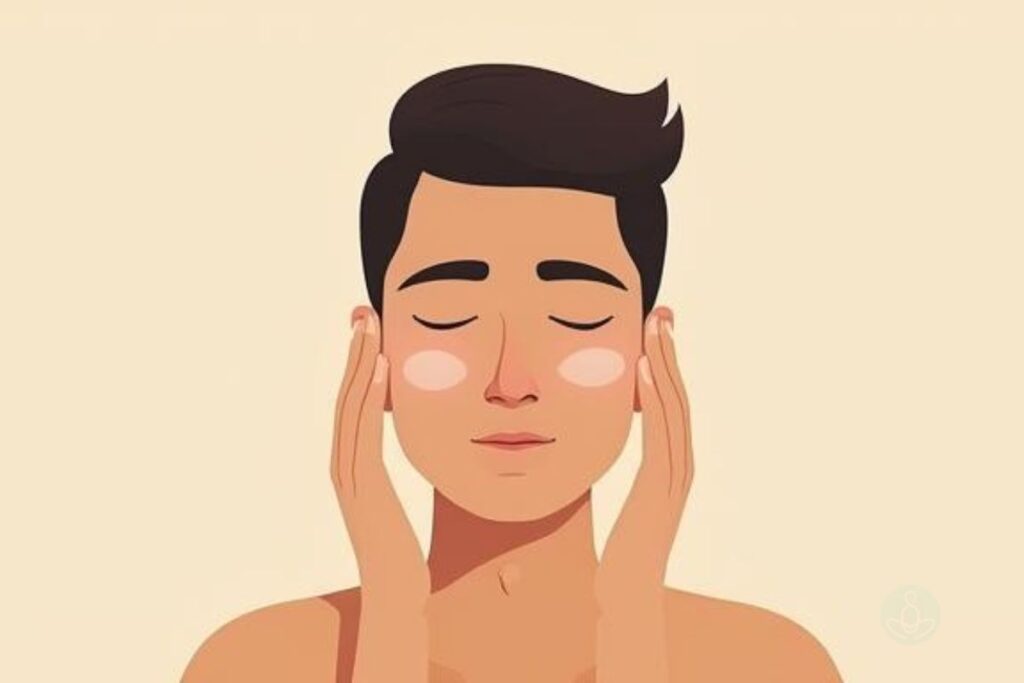
If you live with jaw pain or TMJ symptoms, you’ve probably tried a lot already. Many people who develop jaw tension are doers — thoughtful, conscientious, and motivated to help themselves. When something hurts, the instinct is to do something useful, and self-massage can feel like a sensible place to start.
The challenge isn’t whether self-massage can help. It’s how you approach it.
When done thoughtfully, self-massage can help the jaw feel safer, less guarded, and more at ease. When done with too much force or urgency, it can have the opposite effect — increasing tension and bracing instead of easing it.
This guide is about how to self-massage the jaw in a way that works with your body, rather than forcing change.
Why the word “massage” can be misleading
The word massage often suggests doing something to the tissue — pressing, working, releasing, fixing. For jaw pain, that idea can be unhelpful.
Most jaw pain isn’t caused by a single tight muscle waiting to be released. More often, the jaw is already guarded. It’s holding on because it doesn’t yet feel safe enough to let go.
If your approach feels forceful or corrective, the nervous system may interpret that as another reason to brace — and the jaw braces harder in response.
It is better to approach as you would an injured animal. If something approaches an already sensitive system quickly or forcefully, the question being asked at a nervous system level is: Is this a threat? If the answer is yes, the response is more tension, more guarding, more sensitivity.
This is why “working into it” or pushing through discomfort so often leads to flare-ups. The jaw isn’t stubborn — it’s protective. Research on massage and TMJ pain consistently supports this — gentler approaches produce better outcomes.
A more helpful way to think about TMJ self massage is not as something you do to the jaw, but as a way of creating conditions where the jaw may begin to soften on its own.
Ask yourself before you begin: am I trying to correct something, or am I checking in? Curiosity works. Force doesn’t.
How to do TMJ self massage well
It’s not about pressure — it’s about intent.
The most important part of self-massage isn’t where you place your fingers. It’s how you approach the contact. A helpful mindset is to ask rather than tell — approach slowly, and wait to see how the jaw responds.
How much pressure is okay? Use a simple 0–10 scale, where 0 is no sensation and 10 is unbearable pain. Aim for no more than 4/10. Once you’ve found a gentle pressure, pause and notice:
- Does the sensation stay the same?
- Does it soften from a 4 to a 3 or 2?
- Or does it increase?
If it gradually eases, the tissue and the nervous system are settling. If it increases, reduce pressure or stop. More pressure is not more effective. Go light — then ask yourself: can I go lighter still?
Rather than massage — explore. Think in terms of three simple approaches:
- Hold — light, still contact can be surprisingly effective. Sometimes doing less allows more change.
- Slow movement — small, unhurried movements invite curiosity rather than correction.
- Pin and move — holding a point lightly while slowly opening or closing the jaw can feel helpful, as long as it stays easy and unforced. Let the tongue rest gently on the roof of the mouth just behind the front teeth — this naturally limits how wide the jaw opens and adds a sense of stability.
Throughout — notice your breath. Is it flowing easily? Has it become short or held? Your breath often tells you more about how your system is responding than the jaw itself. A steady breath means the system feels safe. A held or tightened breath is a signal to ease off.
When the jaw feels too sensitive to touch, don’t force it. Sometimes, in a flare-up, the jaw is the last place to start. Working elsewhere in the body — the upper neck and base of the skull, even the hips or feet — can allow the jaw to soften without touching it directly. The body is more connected than it might seem, and sometimes the jaw responds most when you leave it alone.
Optional self-care tools
If you’d like a simple set of tools to support this approach, you may find the Jaw & Body Care Set helpful.
It’s designed to complement the ideas in this guide — not to replace hands-on self-massage or create another routine to follow.
The set also includes the Jaw & Body Care self-massage guide, which you can return to in your own time.
Do you need massage balls?
No — you don’t need massage balls to care for your jaw.
Hands-only self-massage is completely valid and often enough.
Massage balls can be useful because they:
- create a different quality of contact
- allow you to rest into pressure rather than apply it
- help some people sense areas more clearly
For others, hands feel safer and more intuitive.
Neither is better. Try both if you like, and notice how your jaw — and your breath — respond.
Signs the contact is supportive:
- a sense of ease or settling
- your breath becoming slower or less held
- the tissue feeling less guarded or dense
- the jaw feeling more spacious or less clenched
Signs to ease off or stop:
- your breath becoming held or shallow
- increased jaw clenching or guarding
- a sense of effort, urgency, or frustration
- pain, sharpness, or a strong urge to push through
These aren’t failures. They’re signals that the system may need less input, not more. Often, doing less allows more settling to occur.
A final thought
You don’t need to fix your jaw.
You don’t need to do this perfectly.
Self-massage is simply one way of letting the jaw know that it doesn’t have to stay on guard all the time.
Sometimes, the most effective change happens when you do a little less — and listen a little more.
You may find these guides helpful

Looking for something else?
When to Seek Medical Advice
Most jaw tension and TMD symptoms are related to muscle guarding, stress, or nervous-system patterns, and they often improve well with gentle self-care.
It’s a good idea to seek medical advice if you experience:
sudden, severe, or unexplained facial or jaw pain
injury, swelling, or suspected dislocation
numbness, weakness, or changes in vision or speech
a fever, illness, or signs of infection
new pain accompanied by weight loss or general unwellness
persistent symptoms that worry you or don’t improve over time
These situations aren’t common, but it’s always appropriate to check in with a qualified medical professional if something feels unusual or concerning for you.