
Vagus Nerve Massage for TMJ — And Why It Works
Sometimes the jaw muscles are simply too sensitive to touch, let alone massage. And jaw tension is rarely just a jaw issue — the body is on high alert, the nervous system is in fight, flight, or freeze, and the jaw is holding tight for protection.
Can we do anything to change that state? Absolutely.
Vagus nerve massage for TMJ is a simple, calming way to do exactly that. It features in my treatments regularly — and the clients who have it in their self-care toolkit tell me it’s especially helpful during flare-ups.
What is the Vagus Nerve?
The vagus nerve is the longest nerve in the body. It runs from the brain all the way down to the gut — connecting the heart, lungs, and digestive system along the way.
What most people don’t know is that it also directly supplies the muscles of mastication — the very muscles responsible for chewing and moving the jaw. This makes the jaw one of the most vagus-nerve-connected areas of the body.
The vagus nerve is the primary switch between protection and rest. When we feel safe, it supports “rest and digest” — muscles soften, breathing deepens, the jaw lets go. When we feel threatened — physically or emotionally — it shifts the system into fight, flight, or freeze. In that state, the jaw muscles tighten automatically.
Why Vagus Nerve Massage for TMJ Works
For many people with persistent jaw tension, the nervous system has been spending too long in protection — and the jaw is one of the clearest places that shows up. This is why stimulating the vagus nerve can sometimes produce a release that nothing else has managed.
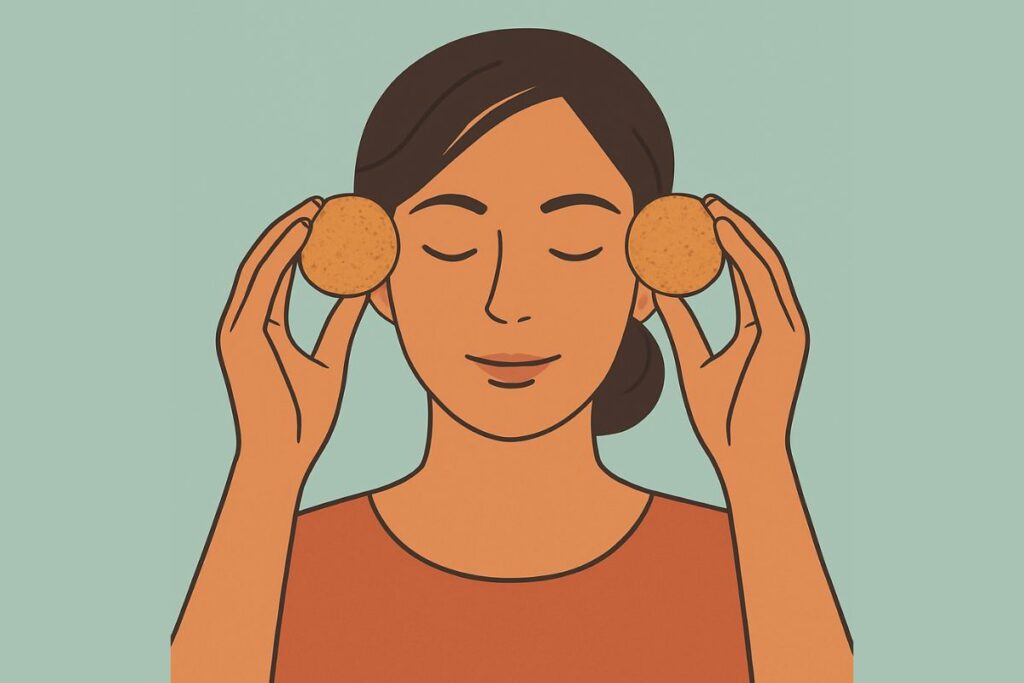
One of the most accessible points to reach the vagus nerve is the temporal area — the soft space at the side of your head, just beside your eyes. This is where the nerve comes close to the surface, and where light touch can have a direct calming effect on the jaw muscles.
A randomised controlled study found that vagus nerve stimulation significantly reduced pain sensitivity in women with TMD-related myofascial pain — with greater improvements in the jaw, neck, and shoulder muscles compared to manual therapy alone.
This is evidence-based care, not alternative medicine. The research is catching up with what many practitioners are already seeing in clinic — calming the nervous system is a meaningful part of jaw care.
For the full picture, read The Mind & the Jaw.
Vagus Nerve Massage for TMJ - How It's Done
For vagus nerve massage for TMJ you can use small massage balls — or simply your fingertips, which work just as well.
Find the soft space at the side of your head, just beside your eyes — where the jaw muscles and the vagus nerve meet. This is your temporal area. Light touch here can invite a surprisingly deep release.
The Technique
- Place the massage balls — or your fingertips — gently against the temporal area, one on each side.
- Begin slow, light circular movements. Explore how lightly you can go.
- Breathe slowly. Allow the tension to soften with each breath.
- Notice any warmth, tingling, or sense of ease as your jaw begins to let go.
- Stay here for as long as feels comfortable — there is no fixed time.
What You Might Notice
Some people feel an immediate sense of warmth or ease. Others notice the jaw softening gradually, or a deeper breath arriving on its own.
If nothing seems to happen at first, that is completely normal. The nervous system takes time to recognise that it is safe. Keep the approach light and unhurried — you are not trying to force a release, you are creating the conditions for one.

Written by
Steven Murdoch
TMJ specialist and musculoskeletal pain-care therapist based in London. CNHC registered · Trained at Jing (BTEC Level 6) and with Helen Baker at TMJ Massage Therapies.
About Steven →You May Find These Guides Helpful
A Reassuring Note
Jaw tension can feel stubborn. But the nervous system is not fixed — it responds to signals of safety, and this is one of the simplest ways to offer that.
Little and often tends to work better than one long session. Return to it whenever your jaw needs some support.
Looking for something else?
When to Seek Medical Advice
Most jaw tension and TMD symptoms are related to muscle guarding, stress, or nervous-system patterns, and they often improve well with gentle self-care.
It’s a good idea to seek medical advice if you experience:
sudden, severe, or unexplained facial or jaw pain
injury, swelling, or suspected dislocation
numbness, weakness, or changes in vision or speech
a fever, illness, or signs of infection
new pain accompanied by weight loss or general unwellness
persistent symptoms that worry you or don’t improve over time
These situations aren’t common, but it’s always appropriate to check in with a qualified medical professional if something feels unusual or concerning for you.